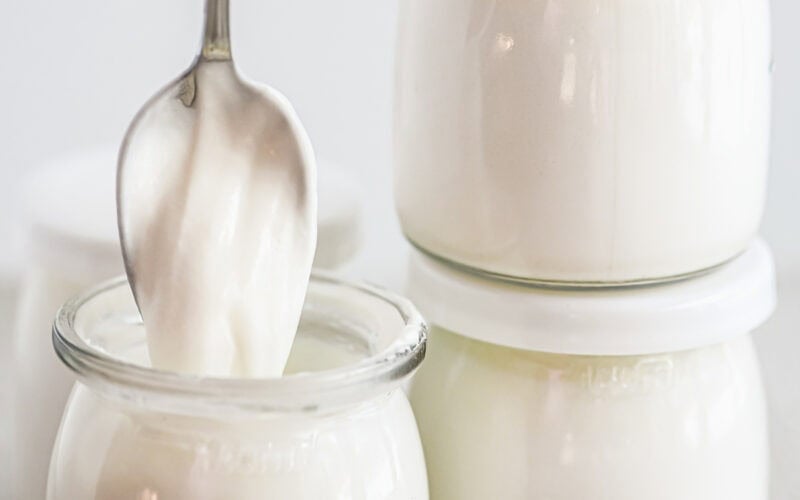


I’m sharing the original high-protein homemade yogurt I learned to make in the 1970s ~ and I promise, it’s the creamiest, best-tasting yogurt you’ll ever eat. End of story!
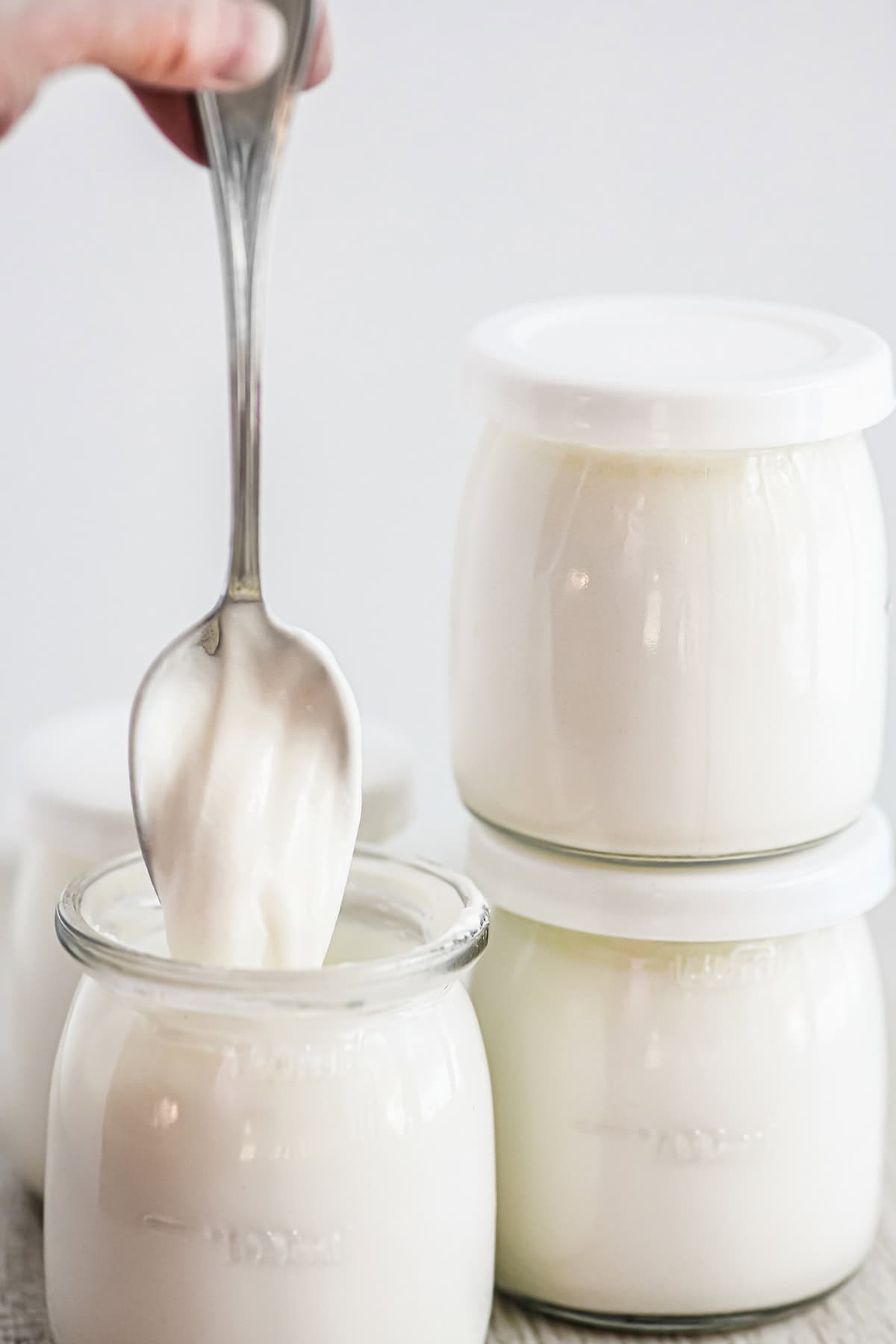
Confused about homemade yogurt? Let’s sort it out!
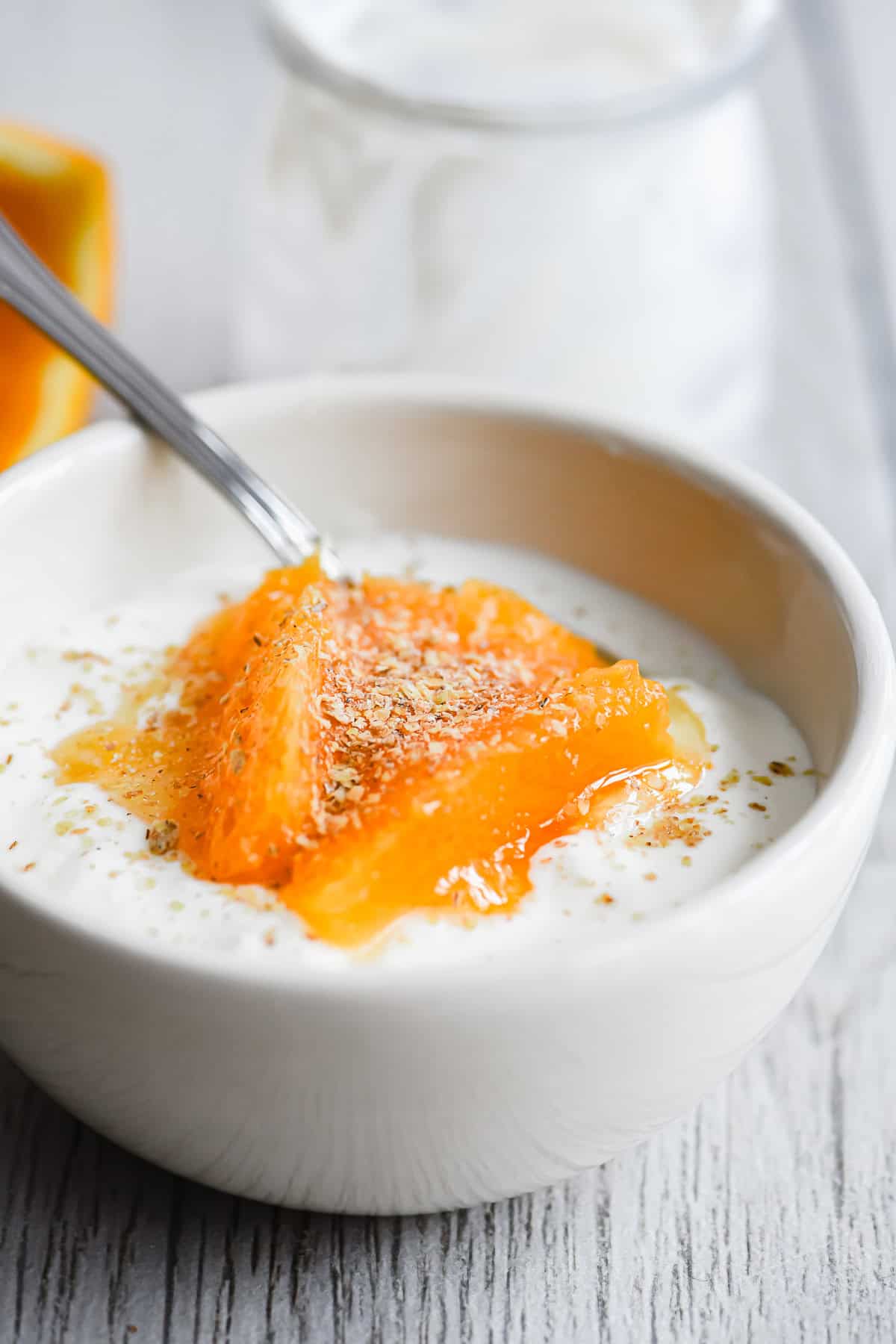
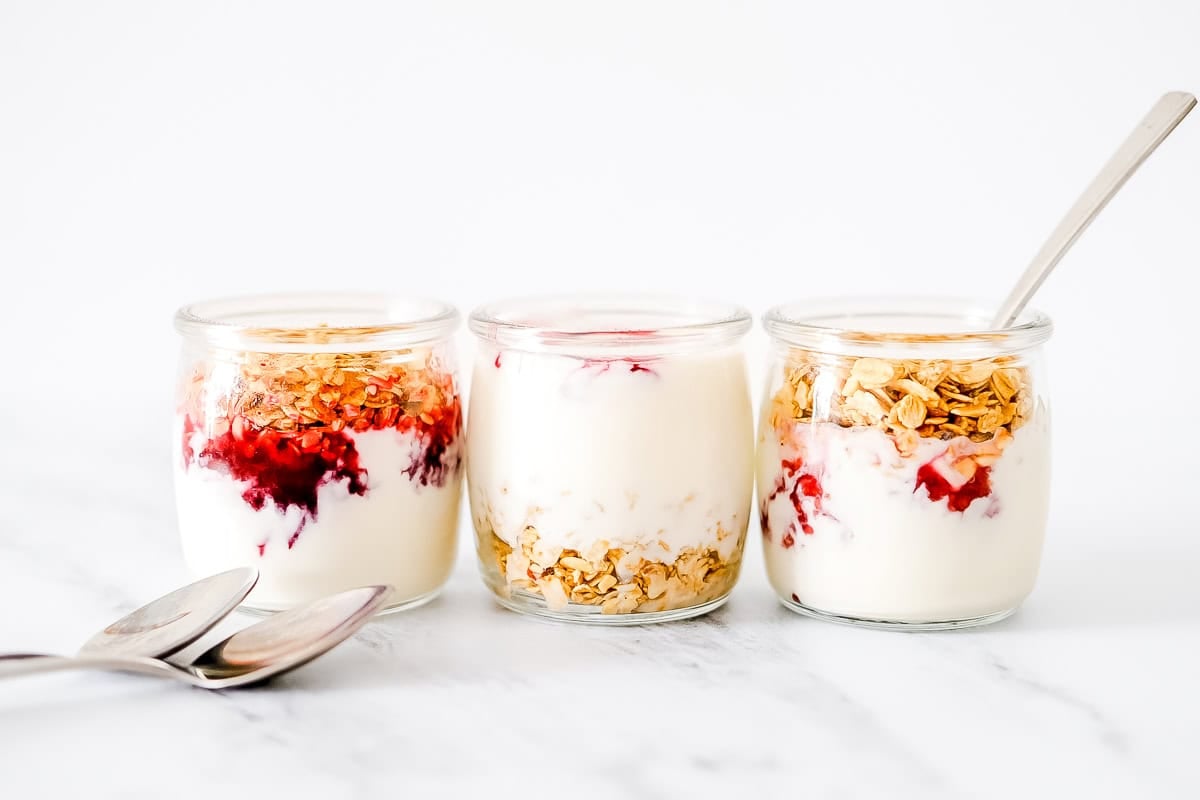
I’ve been making this high-protein homemade yogurt since the 1970s. I learned in the basement kitchen of my very first restaurant job, a tiny back-to-the-land vegetarian spot where we made gallons of fresh yogurt every day. It was served in big bowls with oranges, wheat germ, and honey ~ but I also love to top it with my favorite granola or meusli.
🌟 My homemade yogurt recipe is naturally thick and creamy, without added thickeners like gelatin, pectin, or starches.
🌟 The flavor is perfect: mildly tart without being harsh or sour.
🌟 It’s a high-protein recipe you’ll love.
3 simple ingredients for creamy high protein homemade yogurt
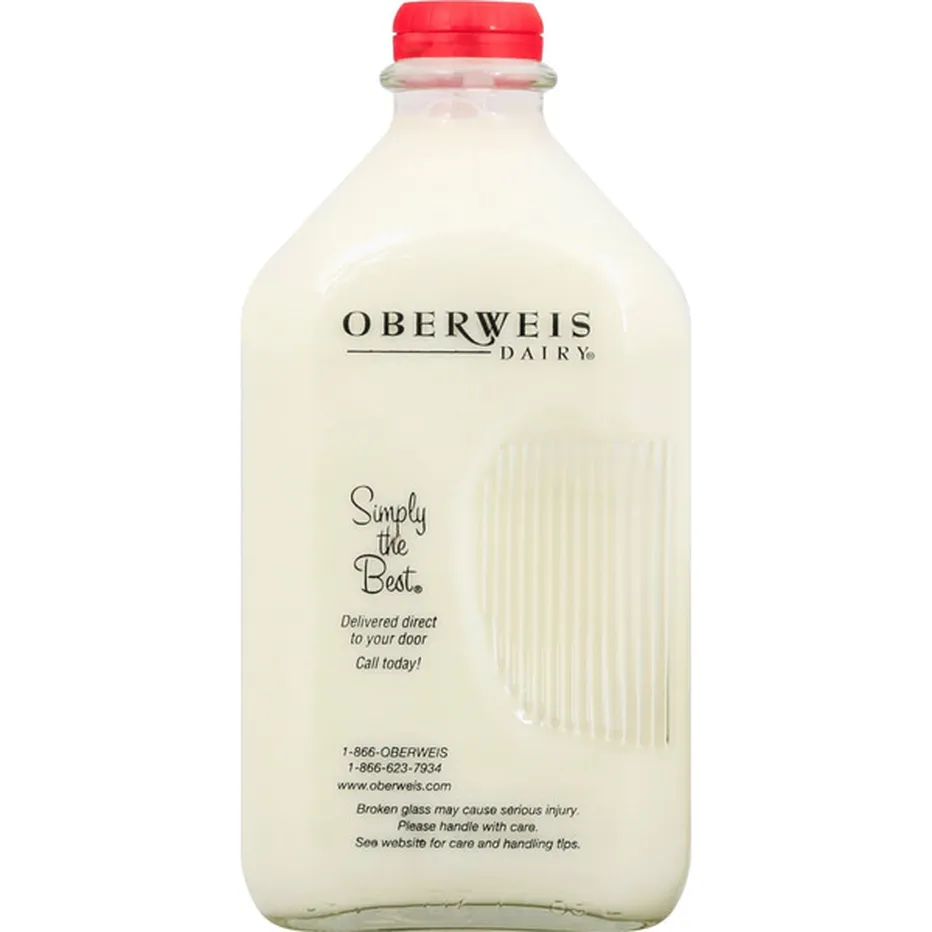
MILK
- Whole milk is ideal for homemade yogurt because it makes a creamy texture and mild flavor, and sets up reliably. But you can use 2% or nonfat if that’s your choice.
- A note about full fat yogurt: newer research suggests that whole milk yogurt may be more satisfying, less processed, and linked to better metabolic health compared to nonfat versions. The shift in thinking moves away from the demonization of fat toward focusing on overall food quality.
MILK POWDER
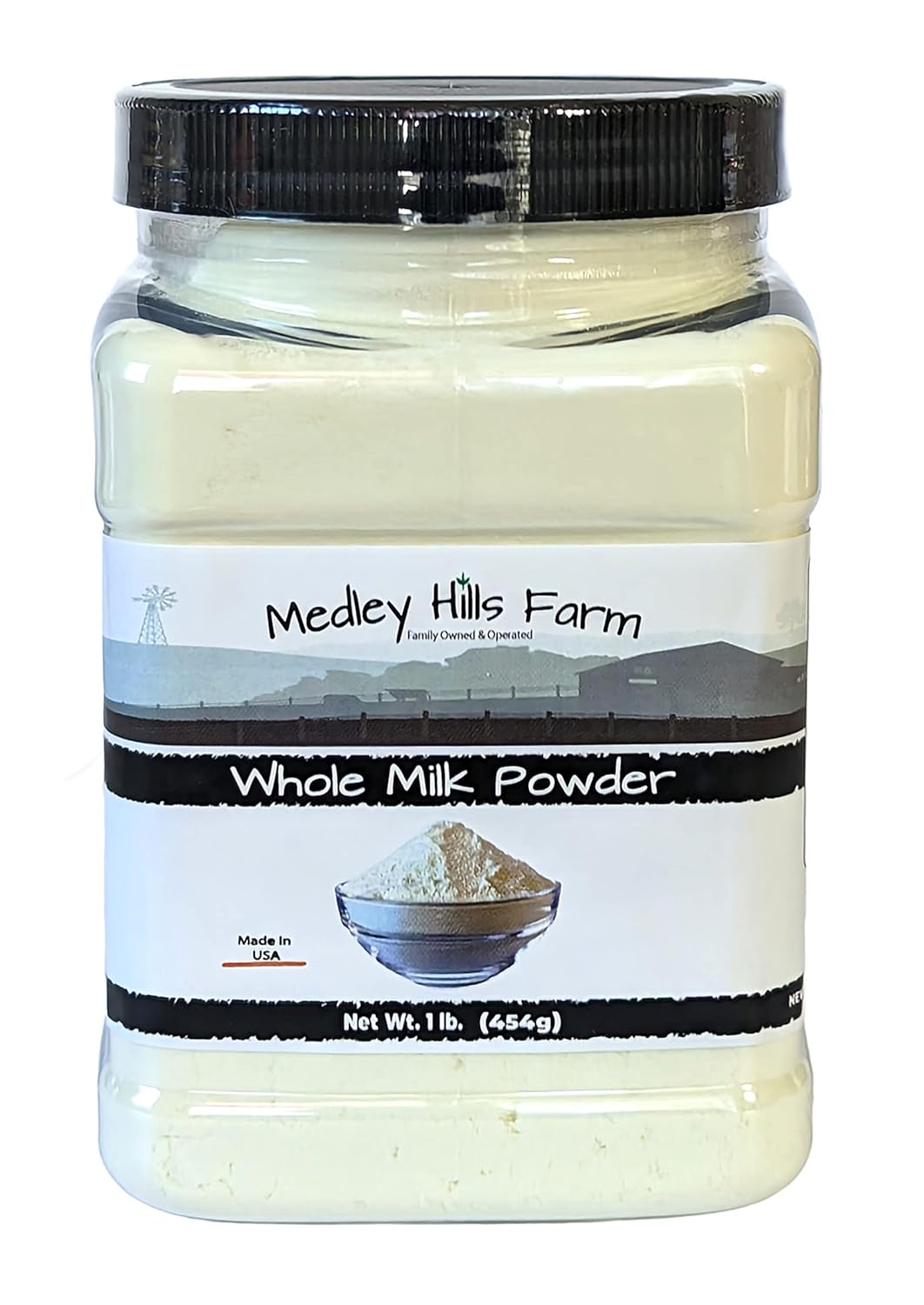
- Milk powder boosts the protein and solids in the milk, which helps the yogurt thicken naturally and leads to a creamier, more spoonable texture. I use whole milk powder, available on Amazon, but you can use low or nonfat powdered milk as well.
STARTER CULTURE ~ you can use either prepared yogurt or a powdered culture.
Yogurt vs powdered culture as yogurt starter
Using yogurt as your starter
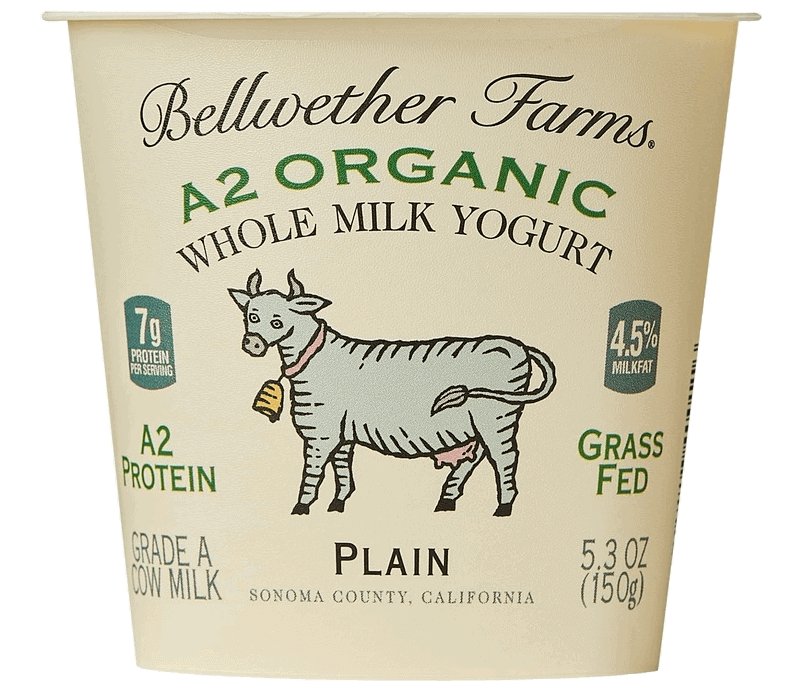
You can simply add a container of good-quality, ready-made yogurt to get the fermentation process started. Choose a plain yogurt with live and active cultures and no added flavors or thickeners ~ and pick one you actually enjoy the taste and texture of, since it will directly shape the flavor of your homemade batch.
Using a powdered culture
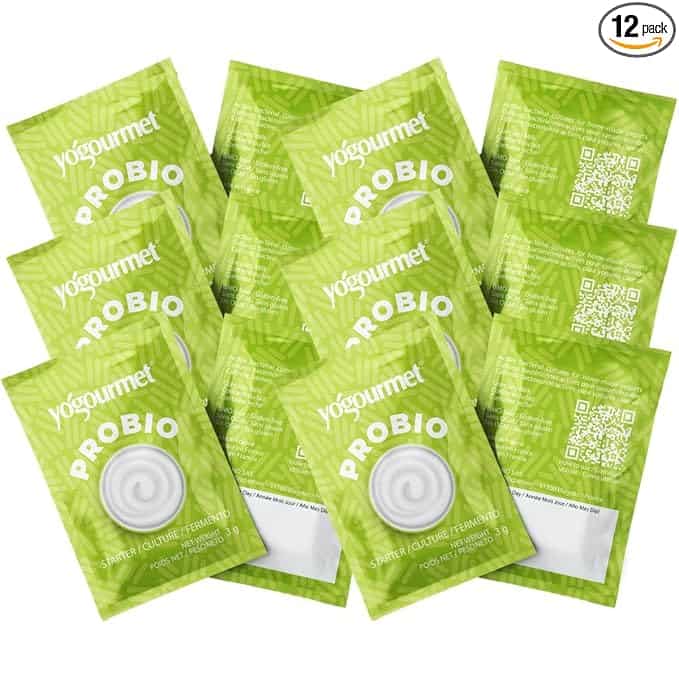
Powdered yogurt cultures are shelf-stable, easy to use, and very consistent from batch to batch. They’re a great option if you want reliability or plan to make homemade yogurt regularly. The flavor is often a little milder and more uniform than using store-bought yogurt, but the results are clean, dependable, and foolproof.
The biggest challenge with homemade yogurt?
Keeping it warm while it ferments! It sounds simple enough, but depending on where you live, and the season, it can be tricky. In olden days, people in colder climates kept their yogurt by the fire. In warm areas they’d leave it in a sunny window or even outdoors.
- The ideal temperature for fermenting yogurt is between 100–110°F (38–43°C) This is hotter than your home, and cooler than your oven’s lowest temperature, so yogurt lovers have to get creative.
4 ways to incubate yogurt, choose one that works for you
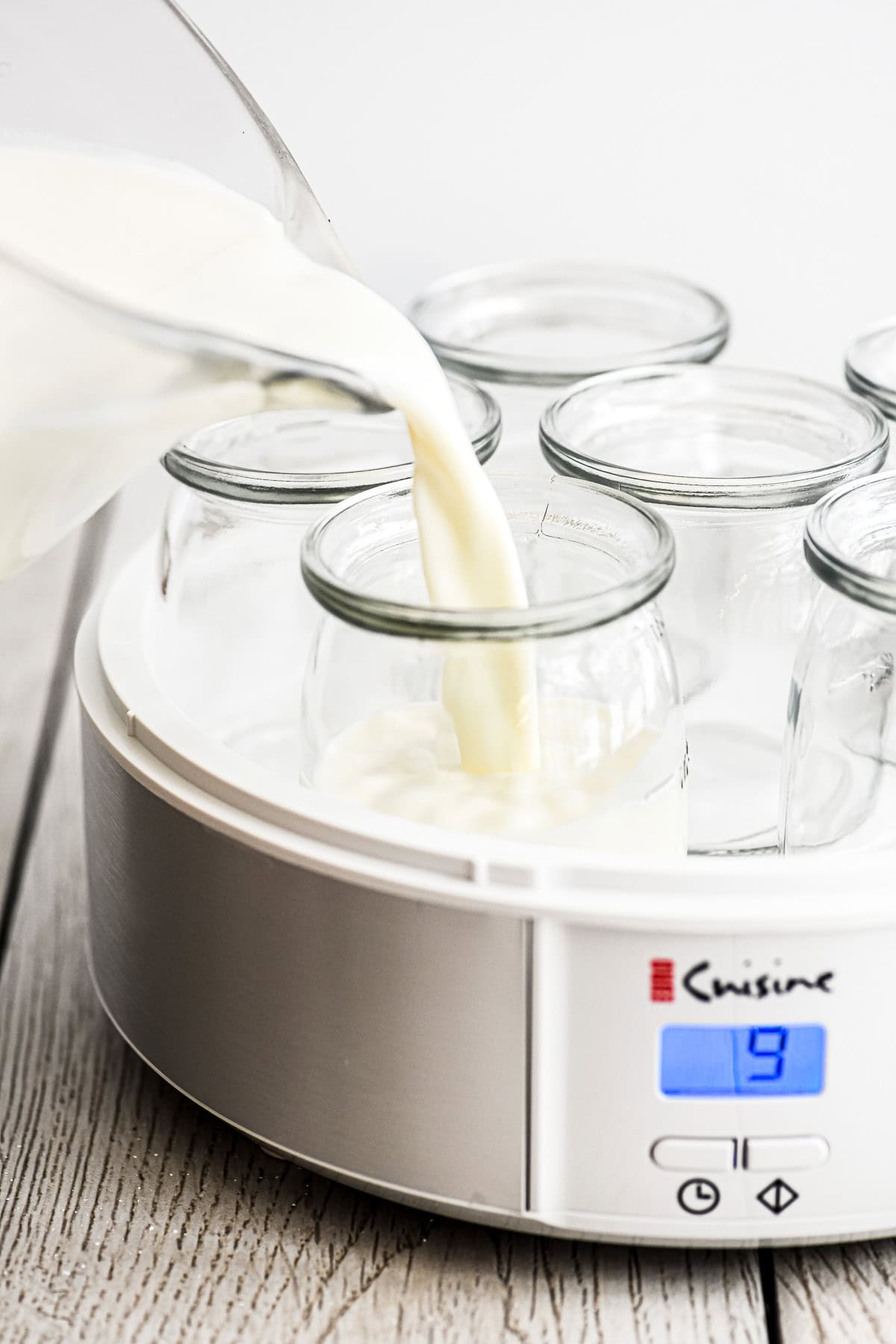
❤️ Yogurt maker ~ If you love to make homemade yogurt and have a small family, this works great. Most are designed to hold jars or a single large container. I use this one.
❤️ Instant Pot (yogurt mode) ~ One of the easiest, most reliable methods if you have one. It keeps the temperature consistent with no fuss.
- Press the “Yogurt” button, then adjust to the “Normal” setting ~ this holds the temp at around 110°F, ideal for culturing. No need to lock or vent the lid, you aren’t pressure cooking.
- Set the time for 6-8 hours, depending on how tangy you like it.
- When done, refrigerate to set fully.
❤️ Proofing drawer or proofing box ~ If your oven has a proofing setting or drawer, it’s made for holding a low, steady temp—perfect for culturing yogurt. You can buy a collapsible proofing box that works for bread, yogurt, kefir, and other home fermenting projects, here. I’ve had mine for years and love it.
❤️ Blankets or Heating pad ~ Wrap warm blankets or a heating pad or electric throw around your container, set it to low. This method works surprisingly well.
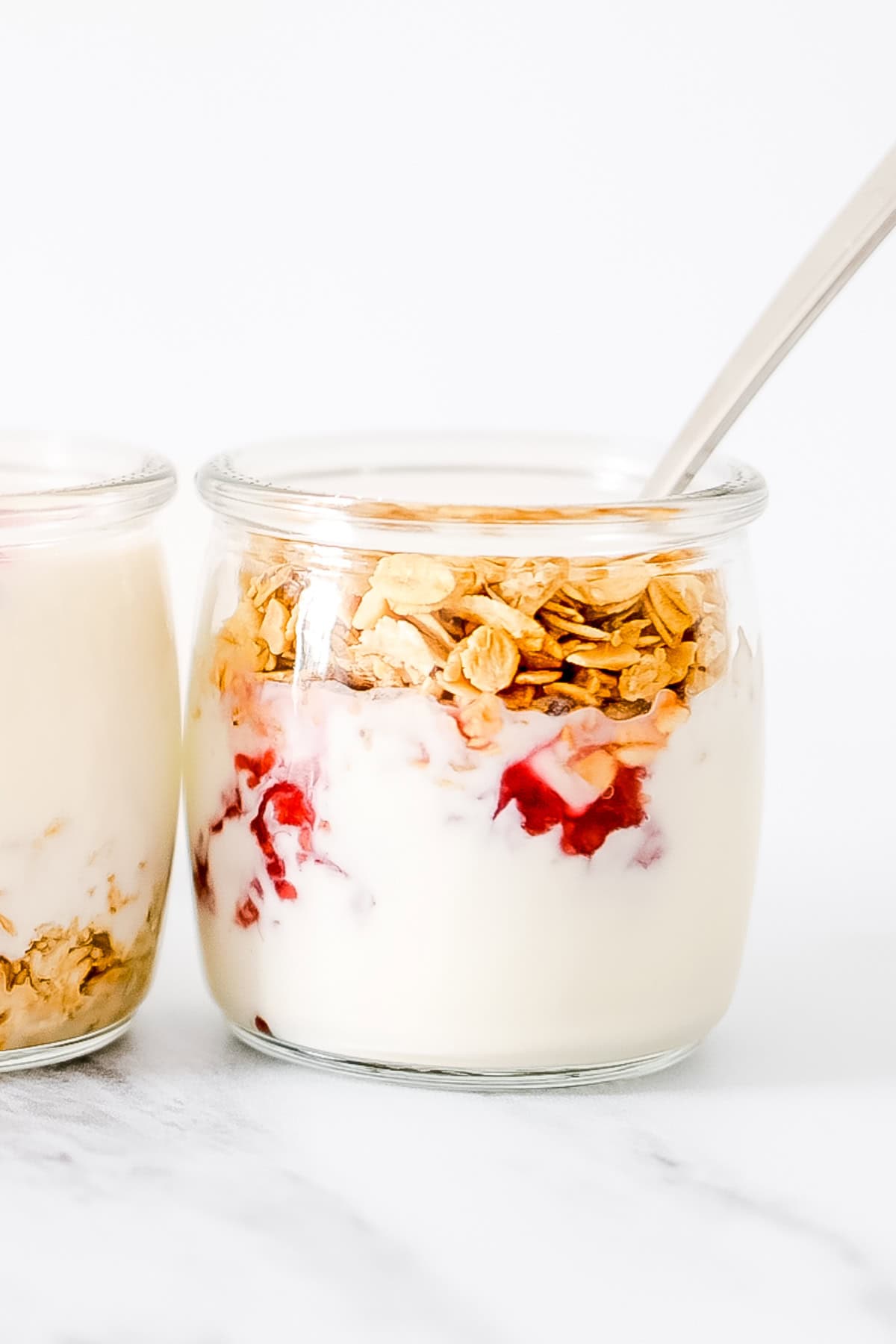
Why I Make Whole Milk Yogurt
I make yogurt with whole milk because I think it has a richer mouthfeel and a milder tang. I’ve never liked the sharp taste of commercial yogurts, so this is a game changer for me. I also believe it’s a healthy choice. Research from Harvard suggests that full-fat dairy can promote fullness, support metabolic health, and even have a more favorable impact on heart health than we once thought (source). For me, it means healthy yogurt I can finally enjoy.
Homemade Yogurt FAQ Guide
The milk powder adds the extra protein, it also functions to give the yogurt a thicker texture than normal homemade yogurt. it’s a win-win.
This method uses commercially pasteurized milk, which is already safe for culturing. The usual step of heating milk to 180°F is done to improve thickness by altering milk proteins; here, added milk powder provides that structure instead.
No. Use milk that is fresh and sweet-smelling. I’ve experimented with expired milk that smelled slightly ‘off’ and the yogurt was awful.
About 1–2 weeks in the refrigerator, tightly covered.
Yes, for several generations, as long as it’s fresh and still tastes clean and tangy.
Less than you might think! A small daily serving (½–1 cup) of fresh yogurt is enough to support gut health.
No, this yogurt is thick and creamy without being gelatinous. It’s the way yogurt was originally made and meant to be. If you want thicker yogurt you can strain through cheesecloth ~ just let it sit in the fridge overnight.
 Add The View from Great Island as a Trusted Google Source
Homemade Yogurt
Equipment
- yogurt maker optional
Ingredients
- 4 cups pasteurized milk, I use whole milk and I always open a fresh carton when making yogurt. You can use low or non fat milk as well but the yogurt will be thinner and less creamy.
- 1 cup powdered milk, again I use whole milk pwder, but you can use low or non fat.
- 6 ounces prepared yogurt , or an envelope of powdered yogurt starter.
Instructions
preparing the milk
- Whisk the 1 cup powdered milk into the 4 cups pasteurized milk. Heat the milk in a saucepan to 110F (just comfortably warm to the touch, not hot.) You can do this on the stovetop or in the microwave (about 1 minute, then continue in short bursts until warm).
- Whisk in the 6 ounces of plain yogurt or the powdered starter.
yogurt incubation method ~ yogurt maker
- If using a yogurt machine fill the little pots to the top and turn on the machine according to directions. Let incubate for 6-8 hours. Refrigerate until cold. It will thicken further as it chills. Note: I check the yogurt at 6 hours: I lightly jiggle the machine and if the yogurt is set, then it's ready. If not, give it another hour or two.
yogurt incubation method ~ Instant Pot
- Pour the prepared milk into the Instant Pot insert (or into a heatproof bowl set inside the pot). Close the lid (it doesn’t need to seal). Press Yogurt and set the time for 6 hours (up to 8–10 for tangier yogurt).
- Let it incubate undisturbed, then transfer straight to the refrigerator to chill and fully set. It will thicken further as it chills.
yogurt incubation method ~ proofing box
- Cover your prepared milk and place in your proofing box set to 100–110°F.
- Let culture undisturbed for 6–8 hours, until lightly set and tangy, then refrigerate.
yogurt incubation method ~ warm spot in the kitchen
- Cover your container of prepared milk and place in a consistently warm spot (100–110°F), such as a turned-off oven with the light on, or a draft-free spot wrapped in thick towels or a heated throw on low. Let sit undisturbed for 6- 8 hours, or until just set. Refrigerate until cold. It will thicken further as it chills..
storing homemade yogurt
- Best quality is in the first 7–10 days. After that it’s still safe if it smells clean and fresh, but the texture may thin and the flavor will become more tart.
Notes
Nutrition
how to use your homemade yogurt!

How to Make Labneh (Yogurt Cheese)
A fun, easy, and healthy homemade labneh, or Middle Eastern yogurt cheese. Use it as an appetizer, in salads, or as a protein rich snack.

Lemon Yogurt Breakfast Cake (Ciambella)
Lemon Yogurt Breakfast Cake is an Italian style coffee cake with a soft, pillowy texture and a delicate lemon flavor.

Kofte Bowl with Warm Spiced Yogurt
Kofte bowl with warm spiced yogurt sauce, a comforting dinner with Middle Eastern lamb and beef meatballs, steamed couscous and warm savory yogurt. Mmmmmm!

Honey Vanilla Frozen Yogurt
Honey Vanilla Frozen Yogurt is a probiotic rich frozen dessert that's healthier than ice cream and so refreshing on a hot day (we love it for breakfast!)

Mint Yogurt Sauce
A refreshing mint yogurt sauce for Mediterranean classics like kofte, falafel, kabobs and more. Use it as a healthy dip for veggies, too!

Doogh (Persian Yogurt Soda)
Discover the unique and refreshing taste of Doogh, a Middle Eastern yogurt-based soda made with tangy yogurt and fresh mint ~ it's full of gut healthy probiotics to boost your immune system!


I made your recipe, the IP method, and it has been chilling in the fridge for about 24 hours. It is still straight liquid. I used whole milk, whole milk powder, and the packet of yogurt starter. It smells just like yogurt, but I am unsure why it has not thickened? Thoughts?
Trying this for the first time and will follow your recipe but I am curious about the dried culture. I bought some but the instructions on the package says one envelope is used for 2 litres (8 cups) of milk. Am I overdoing the culture if I’m adding it to 4 cups milk?
great idea for more protein! Have you tried whey with it instead of milk?
I haven’t but I just bought a big jar of Naked Whey so I might try it!
My Yiayia taught me to make yogurt using the towel/blanket method. I always have some in the fridge. I haven’t added the powdered milk and may try that for more protein. Thank you for all the great recipes and tips.
You’re so welcome, Ann ~ I love hearing from everybody who’s been making yogurt for years!
If I wanted to make it vanilla flavored, what and how much should I use? I m’m just thinking of vanilla yogurt. Maybe vanilla powder?
You can add a tablespoon or two of vanilla powder along with the milk powder before fermenting. If you want to add extract or vanilla bean it’s best to stir in after fermentation.
Can I use Fairlife or other ultra pasteurized milk?
Yes, for sure. The only small difference is that it might take a bit longer and end up a bit softer. The powdered milk helps with that.
I’ve been making my yogurt weekly using a gallon of milk. How would you adjust the milk powder if I still wanted to make this much yogurt?
For a gallon of milk you can use 4 cups of powdered milk for the results I get. You can reduce the powdered milk to 2 cups if you like, just keep in mind that a higher proportion of milk powder helps the yogurt thicken and set more quickly. Because it firms up sooner, it often tastes milder. With less milk powder, the yogurt can take longer to set, giving the cultures more time to produce acid and a tangier flavor. Either way is fine.
I’ve been making yogurt for years and use my sous vide setup to keep the 4 quarts of yogurt (I start with a gallon of whole milk) stay at 110 degrees for 9 hours, then refrigerate.
Nice!
Do I have to use whole milk?
No, but it’s the way I do it. You can use any pasteurized milk you like.