


Tea making is thousands of years old, but that doesn’t mean we can’t have some fun with it! I’ll show you how to make tea using ancient principles with both familiar and surprising ingredients!

Don't Lose This Recipe!
Making tea…it’s a little bit exotic, a little bit shrouded in mystery, most of us only know it from the little white bags with the string and paper tags ~ we’ve probably never even bothered to open one up to see what’s inside. So it might come as a surprise to some that you don’t need a tea bag at all to make a great cup of tea.
Tea and tisane (pronounced tee-zan) are both brewed beverages, but they differ in their ingredients:
- Tea:
- It started in China with the Camellia Sinensis tea plant, which is the source of traditional tea to this day.
- Includes varieties like black, green, white, oolong, and pu-erh teas.
- Contains caffeine, although levels vary by type and brewing method.
- Known for its rich antioxidants and unique flavors that vary based on processing and region.
- Tisane (Herbal Tea):
- Made from herbs, flowers, fruits, or spices—not from the tea plant.
- Popular tisanes include chamomile, peppermint, rooibos, and hibiscus.
- Naturally caffeine-free (except for certain blends that might include caffeinated ingredients).
- Known for a range of health benefits depending on the herbs used, and commonly enjoyed for relaxation or medicinal purposes.
In essence, all tea is from the Camellia sinensis plant, while tisanes are herbal infusions from other plants and do not technically qualify as “tea.” You can make infusions (or tisanes) out of all kinds of edible ingredients, both dried and fresh, so rather than being intimidated by the process, I say let’s get creative and make it our own.

tea can be a huge help in sticking to a healthier diet ~ tea can replace other less healthy comfort ‘crutches’ like coffee, alcohol, and sugary juices and sodas.
Note: don’t over do it with herbal teas, limit your intake to 3 cups a day, and talk to your doctor first if you’re pregnant. Some herbal teas can interfere with certain medications.

you can make a great cup of tea using several different methods: the general rule of thumb is 1 heaped teaspoon of tea to one cup of water and you’ll steep for anywhere from 1 to 7 minutes.
1. You can make your own tea bags to fill with your own ingredients. (These make great gifts)

2. You can infuse your tea in a tea infuser, either with a cute modern version, or a vintage style. This is perfect for a single cup, just fill the bowl of the infuser, close it up, and pour away.

3. You can put the loose tea in a tea pot or French Press coffee pot if you’re serving more than one. This sturdy borosilicate teapot can go right on the stove top and has a built in strainer in the pour spout. I love the modern shape and the glass design allows you to enjoy the beauty of the tea.

4. You can pour boiling water directly over your tea ingredients using a seive. This will give you a subtle, light tea, and is a good choice for strongly flavored ingredients.

5. Don’t have a tea pot or an infuser? No worries, you can use a mason jar!
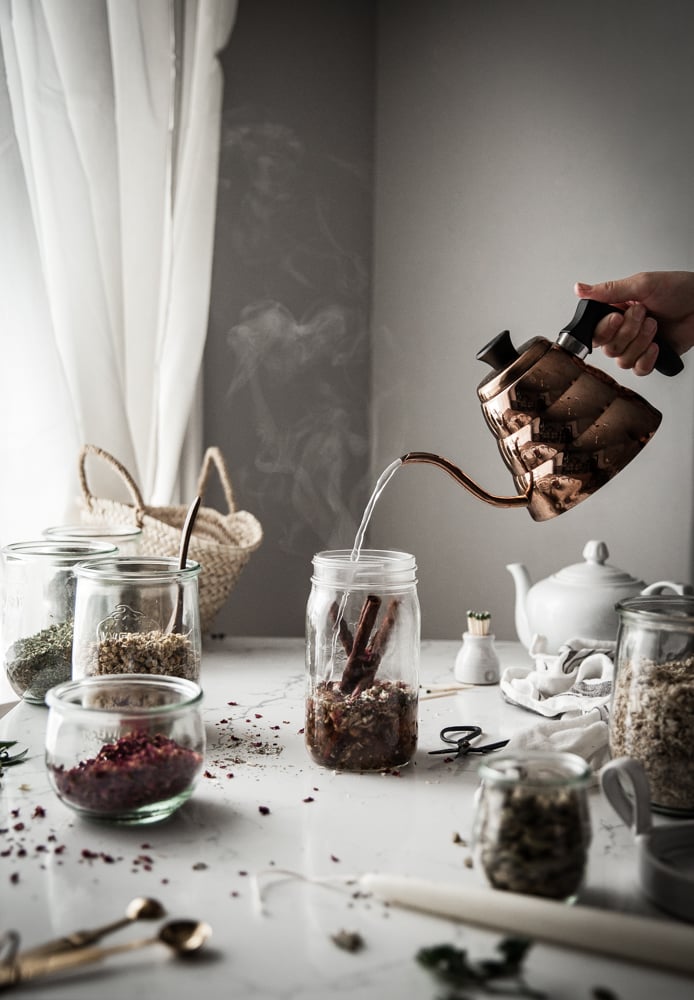
The makings for tea can be as varied as your imagination, just make sure your ingredients are edible and food grade.

My backyard bee balm plants provide me with a refreshing bee balm iced tea every summer.

Common kitchen ingredients make a soothing sage and mint tea with a hint of spice from cardamom, cloves, and cinnamon.

Pine, fir, spruce, and cedar needles are a surprising source of antioxidants and Vitamin C. The aroma is like a walk in the forest.

Fresh or dried lemon balm makes a soothing caffeine free herbal tea that’s relaxing and helps you ease into sleep. It’s good for the digestion, too!

A gorgeous, sparkling sugared pine branch can be used to make a perfectly sweet, aromatic winter tea. Isn’t this wonderful?

This tea makes use of fresh ginger and turmeric root, it’s a great use for those extra nubs of ginger that always seem to be leftover after cooking your favorite stir fry. And fresh turmeric is becoming more readily available in supermarkets, keep an eye out for it.

The honeysuckle vine growing across my front porch inspired this easy infusion of sweet honeysuckle blossoms.

The base of this tried and true soothing tea is chamomile. Chamomile is a very mild sedative and tummy soother. It’s been used this way for thousands of years.

This caffeine-free herbal infusion uses yuzu, a citrus-y Asian fruit that’s in high season right now (Melissa’s Produce will send you some.) This tea is a traditional Korean cold remedy loaded with Vitamin C.

Dried hibiscus petals are mixed with whole peppercorns for an interesting kick in this hibiscus latte.











sometimes some food colouring could give a funny/weird taste. may i suggest using green tea powder (matcha powder) instead of teabags and food colouring? hope that helps.
It’s probably somewhat gimmicky, but I love the dried flower buds that ‘bloom’ in hot water. It pays to have a clear glass teapot, to watch it!
I love those too!
What a nice and inspirational post, Sue. I like your recent thymes – very much.
At summer, I do the infusion with small amounts of water, and after the infusion gets cold, I add sparkling water and I enjoy it like a soft drink.
I also do infusion with thyme , which is such a great remedy.
We drink tea everyday but I usually stick with the same old bags. This is tea inspiration for sure! Thanks for all the great tips and recipes.
I love all of your recipes. One comment: I believe most of these are tisanes not teas which come from the Camellia Sinensis plant, an evergreen shrub native to Asia. I drink tea but these tisanes look delicious…