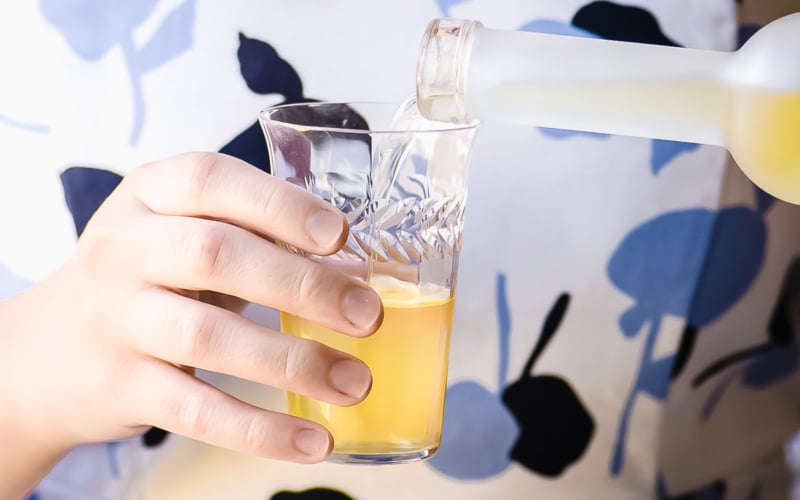


If you love lemons you need to make homemade limoncello ~ this gorgeous Italian lemon liqueur tastes like bottled sunshine!

Don't Lose This Recipe!
Let’s dig in to homemade Limoncello!
What is Limoncello?
Limoncello is a vibrant Italian lemon liqueur ~ sweet, zesty, and super refreshing ~ made to be sipped ice cold after a meal.
This homemade limoncello is fabulous, simple, and rustic ~ made just like they do in Italy. Lemon peels are steeped in strong neutral alcohol (like grain alcohol or high-proof vodka) to pull out all the oils and flavor. After steeping, the infused alcohol is strained and mixed with a simple syrup to balance the sharpness with sweetness. Then it’s bottled and stashed in the freezer, ready to be pulled out whenever needed. One sip will transport you to the Italian countryside!

Let’s make it!
Making homemade limoncello is a long-standing tradition along the Amalfi Coast, in Sorrento, and on the island of Capri ~ all famous for their intensely aromatic lemons that grow everywhere. Homemade versions are easy and let the fresh lemon flavor really shine. You don’t need any special equipment ~ just some good lemons, a bottle of vodka, a little sugar and some time.

Limoncello ingredient notes
- organic lemons
- Traditionally Italian Sorrento lemons are used for making limoncello. These lemons are known for their thick and fragrant peels. Here in the US, look for lemons that have thick aromatic peels because that’s what’s going to give your liqueur its flavor. I recommend using organic lemons because the color and flavor will be extracted from those peels, and you don’t want random chemicals in your liqueur.
- Note: I do not recommend Meyer lemons for this recipe, their peels are too thin.
- grain alcohol
- Grain alcohol is a nearly pure, flavorless alcohol distilled from grains ~ it’s extra strong (about 190 proof) and perfect for extracting flavor in homemade infusions like limoncello. A brand like Everclear is a common choice.
- You can use vodka, but it’s best to use a high-quality, neutral-flavored vodka that is at least 80 proof (40% alcohol by volume). The vodka serves as the base for the limoncello, and its neutral flavor allows the lemon zest to shine through.
- Some popular vodka brands that are commonly used for making limoncello include Absolut, Grey Goose, Belvedere, and Ketel One.
- sugar
- a simple syrup made with sugar and water will sweeten and bring out the flavor of your homemade limoncello. You can also use a honey syrup: warm equal parts honey and water together.

Homemade Limoncello step by step
step 1. wash, dry, and peel your lemons
Use a vegetable peeler to remove the peel in strips. Make sure to get only the yellow part, the white part is bitter. If your peels have some white pith stuck to them, you can just scrape it off with a small knife.

step 2. combine the peels with alcohol and let steep
Place the lemon zest in a large glass jar or airtight container and pour your alcohol over it, making sure that all the zest is submerged. Cover the container with a lid and store it in a cool, dark place for at least two weeks, or up to a month, shaking the container once a day.

step 3. strain the limoncello
After two weeks, taste the mixture. If it’s not as lemony as you’d like, leave it for another week or two and taste again. When it is just right, strain the infusion through a fine-mesh strainer or cheesecloth, discarding the lemon zest.

step 4. add sugar
Adding a simple sugar syrup sweetens and brings out the lemon flavor. In a saucepan, combine the water and sugar and bring to a boil, stirring until the sugar dissolves. Let the syrup cool to room temperature and then add the syrup to the infused vodka and stir to combine. You can adjust the amount of syrup for a stronger or more mellow result.
step 5. bottle and chill
Transfer the limoncello to clean glass bottles or jars and chill or freeze them before serving.

Storing + serving your homemade Limoncello
Homemade limoncello will keep beautifully for a few months in the fridge. The high alcohol acts as a natural preservative, but the flavor is at its brightest in the first few months, so don’t wait too long to enjoy it.
You can also store limoncello in the freezer ~ the alcohol keeps it from freezing solid. Instead, it turns thick and silky, like a citrusy syrup.
In Italy, limoncello is always served after dinner, in tiny glasses or chilled shot glasses. It should be ice cold when you pour it ~ freezing mutes the alcohol burn and lets that pure, bright lemon flavor shine through.

Pro tips for homemade Limoncello
Use the right lemons ~ and treat them right
Always go for organic, unwaxed lemons. Rinse and dry them well. When zesting, skim just the outer yellow ~ any white pith will add bitterness you can’t hide later.
Choose the strongest alcohol you can find
190-proof grain alcohol pulls out more lemon oil, faster and cleaner. If you use lower-proof vodka, know you’ll need a longer steep and your final flavor will be softer.
Timing is flavor
Let your peels steep at least 7–10 days, but no longer than 30. After that, the bitterness starts to creep in.
Don’t skip the syrup step if using honey
If you swap honey for simple syrup, always dilute it first with warm water. Straight honey won’t blend properly and could cloud or thicken the final drink unevenly.
Cloudiness is a badge of honor
When you add syrup and your limoncello clouds up, celebrate it. It’s proof that real lemon oils were extracted ~ commercial limoncello often lacks that richness.
Resting Limoncello transforms it
Freshly bottled limoncello can taste sharp. Let it rest in the fridge or freezer for at least a week before serving. A little patience smooths and deepens the flavor dramatically.
Chill, don’t rush
Always serve limoncello ice-cold ~ straight from the freezer if possible. Cold thickens the texture slightly and tames any heat from the alcohol.
Small batch, better control
Making a smaller batch (say, 750ml alcohol + 5-6 lemons) lets you control flavor better and adjust syrup sweetness to taste.
Taste as you go
Before you bottle, taste. Need a softer edge? Add a splash more syrup. Too sweet? Blend in a little extra alcohol. Homemade limoncello should reflect your ideal balance.
LIMONCELLO RECIPE
 Add The View from Great Island as a Trusted Google Source

Homemade Limoncello
Equipment
- vegetable peeler
- clean jar or jars with lids
- fine mesh strainer or cheesecloth
Ingredients
- 5 organic lemons
- 750 ml grain alcohol or high proof vodka
simple syrup
- 1 1/2 cups sugar
- 1 1/2 cups water
Instructions
- Wash and dry your lemons really well. Use a vegetable peeler to remove the peel in wide strips, being careful to get just the yellow part ~ the white pith underneath is bitter and can throw off the flavor. If you see any white clinging to your peels, just scrape it off gently with a small knife.
- Place the lemon peels in a large glass jar or airtight container. Pour the vodka over the peels, making sure they’re fully submerged. Cover the jar tightly and tuck it away in a cool, dark place for at least two weeks ~ up to a month if you want a deeper flavor. (You can use several smaller jars if that’s easier.) Give the jar a good shake once a day to keep everything moving.
- After the infusion time, strain the vodka through a fine-mesh strainer or a layer of cheesecloth, discarding the peels.
- In a saucepan, combine the water and sugar. Bring it to a boil, stirring until the sugar completely dissolves. Let the syrup cool to room temperature before adding it to the infused vodka. Stir well to combine. (You can play with the amount of syrup depending on whether you want a stronger, drier limoncello or a softer, sweeter one.)
- Pour the finished limoncello into clean glass bottles with tight-fitting lids. Store in the refrigerator or freezer until you’re ready to serve ~ and remember, it’s best ice cold.
Notes
Nutrition
Troubleshooting quick fixes
My limoncello is too bitter
That usually means too much pith made it into the mix. You can soften it by adding a little extra syrup ~ it won’t erase the bitterness completely, but it’ll smooth it out.
My limoncello is too sweet
Blend in a small splash of high-proof alcohol, a tablespoon at a time, until it tastes brighter again. (Go slow ~ you can always add more.)
My limoncello tastes harsh or boozy
It just needs more resting time. Tuck it back into the fridge or freezer for another week. If it’s still sharp after that, a tiny bit more syrup can round it out.
My limoncello isn’t cloudy
No worries! It still tastes great. It just means your alcohol was a little lower-proof, or you filtered it a bit more ~ you’ve made a slightly lighter style.
Limoncello flavor twists
If you want to play with tradition a little, here are some simple ways to put your own stamp on homemade limoncello:
Rosemary Limoncello ~Toss a sprig of fresh rosemary into the jar with your lemon peels. It adds a subtle herbal note that’s incredible with the bright citrus.
Vanilla Limoncello ~ Slip half of a vanilla bean (split lengthwise) into the alcohol while it steeps. It softens the lemon’s sharpness and adds a warm, creamy vibe.
Blood Orange Limoncello ~ Swap half the lemon peels for blood orange peels ~ it gives the drink a stunning sunset color and a deeper, berry-citrus flavor.
Spiced Limoncello ~ Add a few whole cloves or a piece of cinnamon stick to the mix for a cozy, wintery twist. Just be careful ~ spices can get strong fast!
Mint Limoncello ~ Infuse fresh mint leaves into your syrup instead of the alcohol. It gives a cool, refreshing finish without overpowering the lemon.
More Italian recipes to try
- Italian Wedding Risotto
- 11 Italian Recipes Everyone Should Know How to Make
- Paste di Mandorla ~ Sicilian Almond Paste Cookies
- Sicilian Orange Cake
- Creamy Tuscan Chicken Thighs
- Cherry Tomato Focaccia
- Rosemary and Olive No Knead Focaccia Bread
- Spaghetti Peperonata with Tuna and Olives
- Chopped Italian Salad Recipe









Thank you for the recipe. I made some over the weekend. The issues I had were — maybe I added too much lemon peel, the liquor (before I added the simple syrup) was a bit gelatinous. I then added the simple syrup and put my jar in the freezer — and it froze, which when I buy Limoncello and put it in the freezer, it doesn’t freeze. What did I do wrong or is this normal?
The freezing might be due to the amount of simple syrup you used, a lower ratio of alcohol to water might be the cause there. Not sure about the gelatinous issue, I’ve never had that!
What a great idea. I’m already thinking of other liqueurs to try out.
I recently saw a recipe from Ina Garten on making your own vanilla extract. Basically she fills jars with vanilla beans and vodka and lets it sit for a few months. Do you think I could make vanilla extract using this same IP method?
Yes, there are lots of recipes out there for IP vanilla extract, I want to try that too.
I see that you say to put in refrigerator after all is done. I would like to give out as gifts, would it still be good if not refrigerated.?
What size mason jar? Fill it with lemon peel? Thought the original way took way too long. Excited to try.
I used the small mason jars, Holly, because they fit in my Instant Pot. The jars should be sturdy canning jars so they don’t break.
I have now made three batches of this trying 180 100 and 80 proof. I agree that 80 is the best. My issue is that my lemon cello smells like hard boiled eggs. ?????
I’m baffled
I have no idea…I’m going to have to look that issue up!
Is it still alcoholic after cooking? I know alcohol burns off when you cook it, so I’m curious.
It goes into the instant pot in closed jars, Amy, and some does leak out, but the majority stays in the jar.
Hi. I made this yesterday and put it in the freezer once it reached room temperature. This morning I checked on it and it had froze solid? Did I not cook my simple syrup enough? It’s now in the fridge and I will sample tonight.
In your recipe you mention using pint jars, but did you mean half-pint jars? The photos show what looks like what a half-pint jar typically looks like. Also, you mention that you won’t use the whole bottle of vodka, but two pints (32oz) is more than enough to hold a whole bottle (25oz) when filled to the top, even with the added peels.
I just updated to clarify Erin, I used 1/2 pint jars.
We use to live in Italy, La Maddalena in Sardegna. While stationed there with my husband we were introduced to creamy melon chello OMG it tasted just like cantaloupe, and also creamy lemon chello but my favorite is the melon. Please if anyone ever comes across a recipe for the melon i would love to have it. Irishlimmerick@ aol.com
Kathy I’m going to work on the melon liqueur asap it sounds so good. The creamy limoncello is a great one, too, that’s been on my list, you’ve given me the incentive to get to it!
How do you make it “creamy”?
I’m working on that recipe Victoria, stay tuned!
On the Mason jars, do they need to be the kind with the two part lid? I have a mason jar with a regular screw on top. Thanks!
It can be the regular lids, too Eliza, as long as your jars are sturdy canning jars you should be fine.
Thank you! Going to give it a go:)
I like Limoncello, but I prefer tequila. I wonder if you could do something like this with tequila and limes. I may have to experiment.
Interesting, let me know…I think you can infuse just about any alcohol, so it should work.
Orange peels and a cinnamon stick go great in tequila. Once infused, I would not sweeten it; just use it in margaritas or other cocktails.